📈 Macro Performance Analytics & Core Trends
🏛️ The Institutional Divide
The performance distribution within the Manyara mock shows a pronounced division between specialized boarding academies, seminaries, and under-resourced community day schools.
Top Performance Brackets: Elite centers across Manyara regularly utilize optimized class configurations, strict academic schedules, and structured evening studies to maximize top-tier marks (Grades A and B). This lowers their institutional Grade Point Average (GPA), signaling high-density success.
The Day School Dilemma: Peripheral public ward day schools continue to exhibit vulnerable performance margins. These environments struggle with instructional continuity, larger student-to-teacher ratios, and logistical constraints that limit effective revision hours.
🔬 Subject-Wise Competency Analysis
When examining performance subject by subject, specific trends stand out sharply across the region:
The Language Anchors: Kiswahili and English Language consistently operate as vital stabilizing factors. Because these rely on continuous daily practice and foundational communication skills, they maintain stable pass rates that protect thousands of borderline candidates from failing completely.
The Humanities Gap: Subjects such as Geography, History, and Civics pull in substantial raw pass rates, but remain heavily prone to "Grade C and D crowding." This means that while students rarely fail them outright, public day centers face difficulties pushing learners into top-tier merit brackets.
The STEM Crisis: Basic Mathematics and core sciences (Chemistry, Physics) remain the primary academic bottleneck dragging down individual and institutional GPAs. The science deficit is explicitly tied to a practical resource gap—under-funded centers frequently lack operational laboratory equipment and reagents, forcing students into practical examinations with minimal hands-on familiarity.
🗺️ Spatial & District Evaluation
The performance distribution reveals clear geographic challenges:
Urban vs. Rural Disparity: Districts with concentrated infrastructure and accessible roads maintain stronger institutional averages.
High-Risk Zones: More remote, pastoralist, or agricultural districts (such as portions of Simanjiro and Kiteto) require direct, localized instructional support due to higher rates of teacher shortages and structural resource bottlenecks.
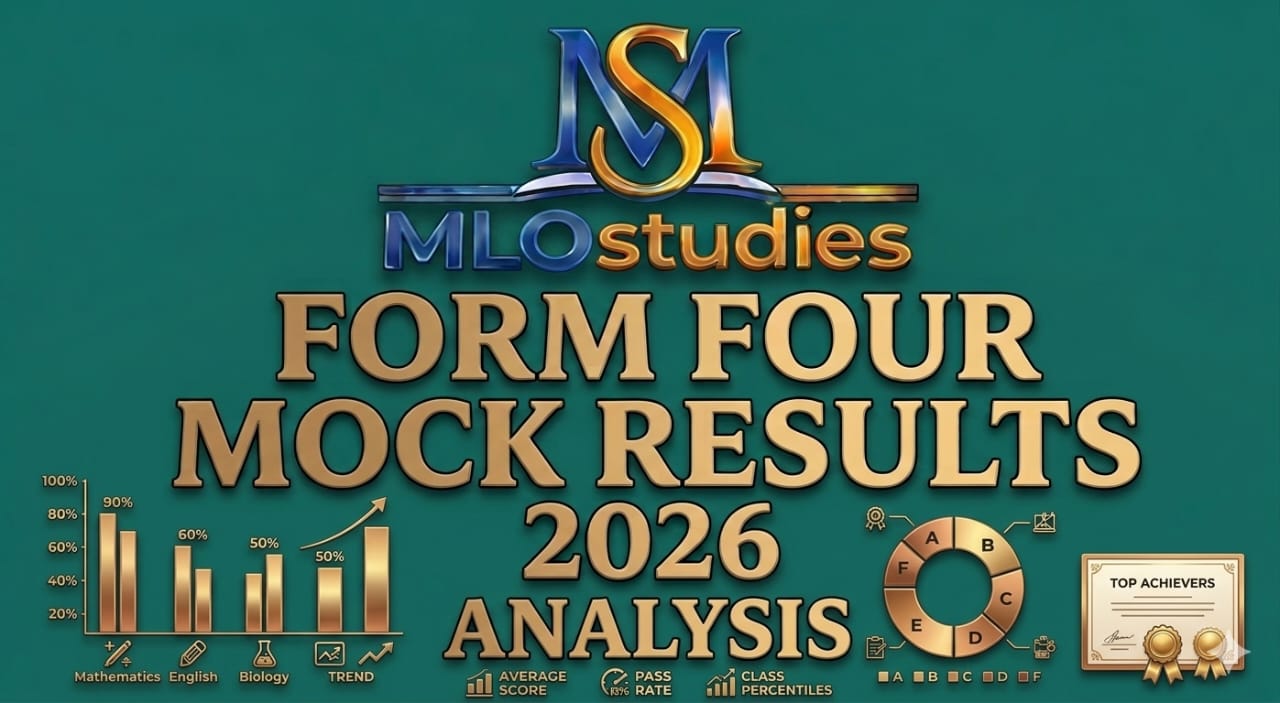
📊 REGIONAL EVALUATION REPORT: Manyara Form Four Mock Examination (2026)
📅 23 Jun 2026, 10:19
📚 About This Update
MLOstudies is committed to providing timely and relevant information to Tanzanian secondary school students, teachers, and parents.
💬 Public Comments